
Professional Exclusion Door Installation
Humane, one-way exclusion door technology for safe and permanent wildlife removal in Windsor, Essex County, and surrounding Ontario communities.
Get a Free Exclusion AssessmentLocally owned & operated since 2018 · Compliant with Ontario wildlife regulations
What Are Exclusion Doors?
The Humane Standard in Wildlife Removal
An exclusion door — also known as a one-way exclusion door or one-way wildlife door — is a professionally installed device that allows animals to leave a structure through their existing entry point but prevents them from re-entering. It is the most humane and effective method of wildlife removal available, and it is the preferred approach of licensed pest management professionals across Ontario.
Unlike trapping or chemical deterrents, exclusion doors work with the animal's natural behaviour. Wildlife such as raccoons, squirrels, skunks, and bats regularly leave their den sites to forage for food and water. The one-way door allows them to exit as usual — but the spring-loaded or gravity-activated mechanism ensures they cannot push their way back inside.
At Pestward, we are the leading authority on exclusion door technology in Windsor-Essex. Our technicians are trained in the correct selection, sizing, and installation of exclusion devices for every species and every type of entry point, from soffit gaps and roof vents to foundation openings and chimney flues.
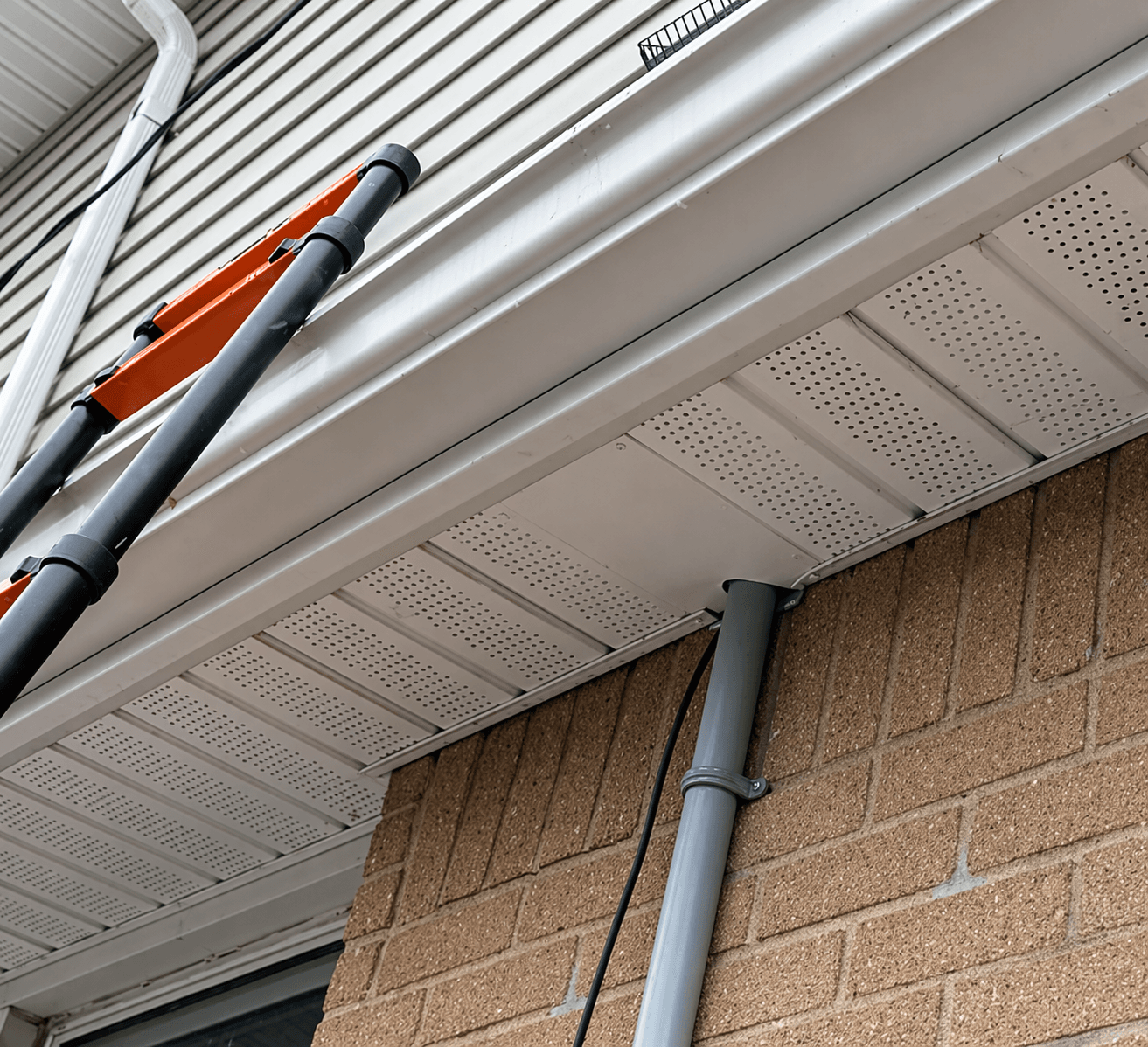
How One-Way Exclusion Doors Work
Our exclusion door systems use a straightforward mechanical principle. The device is mounted directly over the animal's entry and exit hole, creating a controlled pathway that only works in one direction.
Comprehensive Inspection
Our technicians inspect your entire property to identify the animal species, locate all primary and secondary entry points, and assess activity patterns to determine the best approach.
Seal Secondary Openings
All additional entry points are sealed with galvanized steel mesh, hardware cloth, or metal flashing so the animal can only exit through the exclusion door location.
Install the Exclusion Door
A species-appropriate one-way door is mounted flush over the primary entry hole. Spring-loaded or gravity-activated flaps allow the animal to push out but not re-enter.
Monitor & Permanently Seal
After confirming all animals have vacated, we remove the exclusion device and permanently seal the final entry point with durable, gnaw-resistant materials.
Benefits of Exclusion Door Technology
Exclusion doors offer significant advantages over traditional wildlife removal methods. Here's why pest management professionals and homeowners prefer one-way door systems.
100% Humane
No poisons, no kill traps, no stress handling. Animals exit on their own terms and remain in their natural territory. Fully compliant with Ontario's Fish and Wildlife Conservation Act.
Permanent Results
Once the exclusion process is complete and all entry points are sealed with professional-grade materials, the problem is resolved for good — not just temporarily managed.
No Relocation Required
Ontario law restricts wildlife relocation to within 1 km of the capture site. Exclusion doors eliminate the need for relocation entirely, keeping animals in their home range.
Environmentally Responsible
Exclusion doors eliminate the need for poisons, chemical deterrents, or lethal control methods. It's a mechanical solution that works with the animal's natural behaviour — no environmental contamination, no risk to non-target species.
Prevents Property Damage
Wildlife inside walls, attics, and crawlspaces can chew wiring, damage insulation, and compromise structural integrity. Exclusion stops further damage immediately.
Reduces Health Risks
Animal droppings, urine, and nesting materials carry pathogens including histoplasmosis, hantavirus, leptospirosis, and raccoon roundworm. Exclusion removes the source.
Wildlife Species That Require Exclusion Doors
Different species require different exclusion door designs, sizes, and installation strategies. Pestward carries a full inventory of species-specific one-way doors and exclusion devices for every situation.

Raccoons
Raccoons are powerful and intelligent. They commonly enter attics and chimneys to den and raise young. Exclusion doors for raccoons must be heavy-gauge and securely anchored, as a determined mother raccoon can tear through weak barriers. Seasonal timing is an important consideration — spring and early summer are active denning periods, and our technicians assess each situation accordingly.
Learn more about Raccoons →
Squirrels
Squirrels are prolific chewers that commonly invade attics through gaps at the roofline. One-way exclusion doors with torsion-spring mechanisms are effective, but all secondary holes must be reinforced with steel mesh — squirrels will create new entry points if given the chance. We serve exclusion for Eastern Gray, Red, and Flying Squirrels.
Learn more about Squirrels →
Skunks
Skunks den under decks, porches, sheds, and concrete stoops. A one-way exclusion door at ground level combined with buried mesh screening is the standard approach. Skunks are burrowers, so the screening must extend below grade to prevent them from digging back under the structure.
Learn more about Skunks →
Bats
Bat exclusion uses specialized one-way devices — typically netting funnels or plastic tube excluders — that allow bats to crawl out and drop into flight but prevent re-entry. Under Ontario and federal law, bat exclusion is the only legal method of removal. Exclusion must not be performed during the summer maternity season (approximately June through August) when flightless pups are present.

Mice
Mice can squeeze through openings as small as 6 mm. Exclusion for mice involves sealing every crack, gap, and utility penetration with gnaw-proof materials — steel wool, copper mesh, and metal flashing. One-way exclusion funnels at key entry points drive remaining mice out while preventing re-entry. We handle House Mice, Deer Mice, and White-Footed Mice.
Learn more about Mice →
Rats
Rats are strong chewers with powerful jaws capable of gnawing through wood, plastic, and even soft metals. Exclusion requires heavy-gauge galvanized steel mesh and concrete patching at foundation level. One-way doors help clear active infestations while permanent sealing work is completed. We address both Norway Rats and Black Rats (roof rats).
Learn more about Rats →
Birds
Birds such as House Sparrows, European Starlings, and Pigeons nest in dryer vents, soffits, exhaust ducts, and rooftop mechanical units. Bird-specific one-way chutes allow trapped birds to exit while preventing re-entry. After exclusion, openings are permanently screened with durable vent covers.
Learn more about Birds →
Groundhogs & Opossums
These ground-dwelling animals burrow under decks, sheds, and foundations. Heavy-gauge one-way doors installed at burrow entrances allow the animals to leave without return access. Buried mesh aprons extending 12–18 inches outward and downward prevent them from digging new entry routes alongside the sealed opening.
The Pestward Exclusion Door Process
From initial assessment through final seal-up, our exclusion door process is thorough, humane, and designed to deliver permanent results. Every step is performed in compliance with Ontario wildlife regulations.
Full Property Inspection
We inspect the entire exterior and interior — roof, soffit, fascia, foundation, crawlspace, attic, chimney, and utility penetrations — to identify the species, locate every entry point, and assess seasonal and situational factors.
Species & Seasonal Assessment
Different species require different exclusion strategies and timing. We determine the correct device type, confirm that exclusion is legally appropriate for the season, and develop a site-specific plan tailored to your property.
Exclusion Door Installation
All secondary openings are sealed with galvanized mesh, metal flashing, or hardware cloth. The appropriate one-way exclusion door is then mounted flush over the primary entry point, allowing wildlife to exit but not return.
Monitoring & Confirmation
We monitor the exclusion door to confirm that all animals have vacated. Monitoring timelines vary by species — raccoons and skunks typically clear within 2–3 days, while full bat exclusion can take up to two weeks.
Permanent Seal & Prevention
Once the structure is confirmed clear, the exclusion device is removed and the final entry point is permanently sealed with durable, gnaw-resistant materials. We also recommend and perform preventative sealing across the entire building envelope.
Why Choose Pestward for Exclusion Doors?

Pestward is Windsor-Essex County's leading expert in exclusion door technology. Our team has installed hundreds of exclusion devices across residential and commercial properties, and we carry a full inventory of species-specific one-way doors and sealing materials on every truck.
- ✓ Locally owned and operated in Windsor-Essex since 2018
- ✓ Licensed and compliant with Ontario MNRF wildlife regulations
- ✓ Species-specific exclusion devices for raccoons, squirrels, skunks, bats, birds, rodents, and more
- ✓ Full-property inspection identifies every entry point — not just the obvious ones
- ✓ Seasonal awareness and species knowledge inform every exclusion plan
- ✓ Permanent seal-up with professional-grade, gnaw-resistant materials
- ✓ Over 1,300 customers served · 10,000+ completed jobs
- ✓ Available for both residential and commercial properties
Frequently Asked Questions About Exclusion Doors
Signs You Need an Exclusion Door

Don't Wait Until the Damage Gets Worse
Wildlife problems inside a structure always escalate. The longer an animal occupies your attic, crawlspace, or walls, the more damage it causes — and the more expensive the repair becomes. If you're noticing any of the following, it's time to call Pestward for an exclusion assessment:
Scratching, scurrying, or thumping sounds in the attic, walls, or ceiling — especially at dawn, dusk, or overnight.
Visible entry damage including chewed soffit, torn fascia, displaced vent screens, or gaps around roofline edges.
Droppings or urine stains on attic insulation, in crawlspaces, or around the base of the building.
Foul odours from urine, droppings, or deceased animals inside wall cavities.
Nesting materials such as shredded insulation, leaves, or fabric found in attic spaces or behind walls.
Chewed wiring — a serious fire hazard commonly caused by squirrels and rodents in attics and wall voids.